
Why Texas Ranch Retreats Are Replacing the Traditional Corporate Hotel Stay
Something is shifting in how Texas companies plan their annual retreats — and if you've been on both sides of it, you already know why.
The traditional corporate hotel stay had a good run. Book a block of rooms, reserve the conference room, arrange the catered lunch, and call it a retreat. For a long time, that was the default. It was predictable, easy to justify on a budget spreadsheet, and nobody got fired for choosing a Marriott.
But something has been quietly happening over the past several years. Companies that switched to private ranch retreats started coming back. Not just once — every year. And the ones still doing the hotel package started hearing about it from their teams.
The ranch model isn't a trend. It's a correction. Here's why it's winning.
The Hotel Was Never Designed for What a Retreat Is Supposed to Do
This is the root of the problem and almost nobody says it out loud.
A hotel is designed for travelers. Individual travelers, passing through, who need a bed and a WiFi password and a place to store their luggage. The entire physical and operational logic of a hotel — the room layout, the lobby, the elevator banks, the restaurant with tables for two — is built around the individual experience.
A corporate retreat is supposed to do the opposite. It's supposed to take a group of people who spend most of their time in separate offices, on separate calls, managing separate workstreams — and create conditions for genuine connection, honest conversation, and the kind of collective thinking that doesn't happen during a normal week.
Those two things are in direct conflict. And when you try to run a retreat in a hotel, the hotel wins. People drift to their rooms. Meals feel transactional. The "team building" portion of the agenda sits in the same conference room where every other meeting happens. The environment is actively working against the outcome you're paying for.
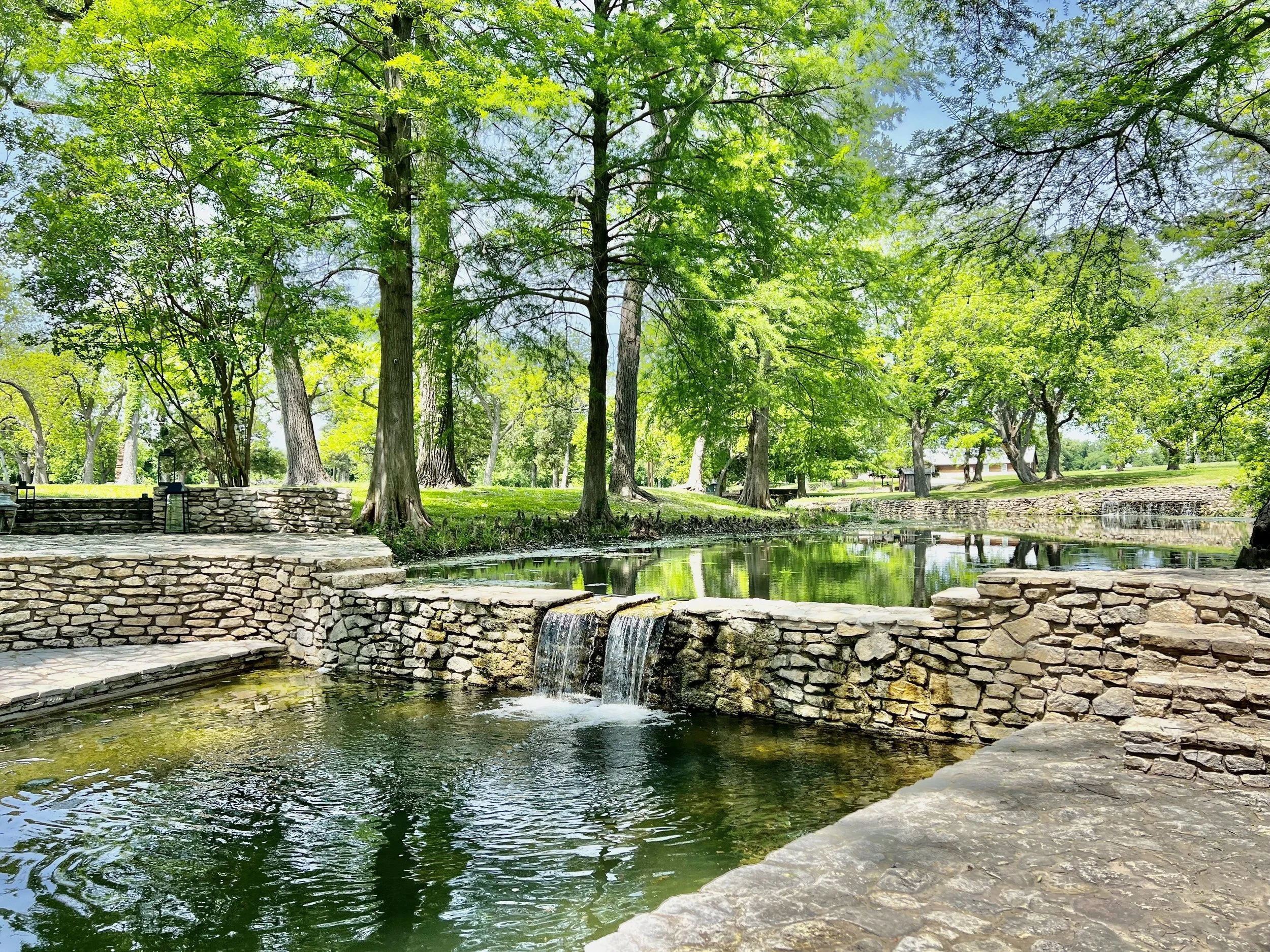
A ranch doesn't have that problem. A ranch was built for exactly what a retreat is trying to create.
What Happens to a Team When You Put Them on 1,000 Acres
There's a moment that happens to almost every corporate group when they pull through the gates at a property like Spring Lakes Ranch. The city noise drops away. The land opens up. Someone in the car says something like "okay, this is different" — and they're right.
That moment matters more than most retreat planners realize. It's the psychological reset that makes everything that follows more possible. When your team arrives somewhere that genuinely feels different from the office — somewhere that has no visual cues from the workweek, no lobby full of other business travelers, no conference room that looks like every other conference room — the brain shifts. Old patterns loosen. People show up differently.
Research on creativity and problem-solving consistently shows that novel environments produce better thinking. The team that's been stuck on the same strategic question for six months often finds clarity not because of the agenda you built — but because they're standing in a field under a Texas sky thinking about it for the first time without their usual surroundings.
You can't manufacture that in a hotel. You can only choose an environment that makes it possible.
The Under-One-Roof Difference
Ask anyone who has planned both kinds of retreats what the single biggest operational difference is, and they'll tell you the same thing: what happens after the last session of the day.
At a hotel, people go to their rooms. The retreat energy dissipates. The conversation that was just getting interesting at dinner wraps up because there's nowhere natural to continue it. The team that was finally starting to open up during the afternoon session scatters to separate floors and separate screens.
At a ranch where everyone sleeps under the same roof, something completely different happens.
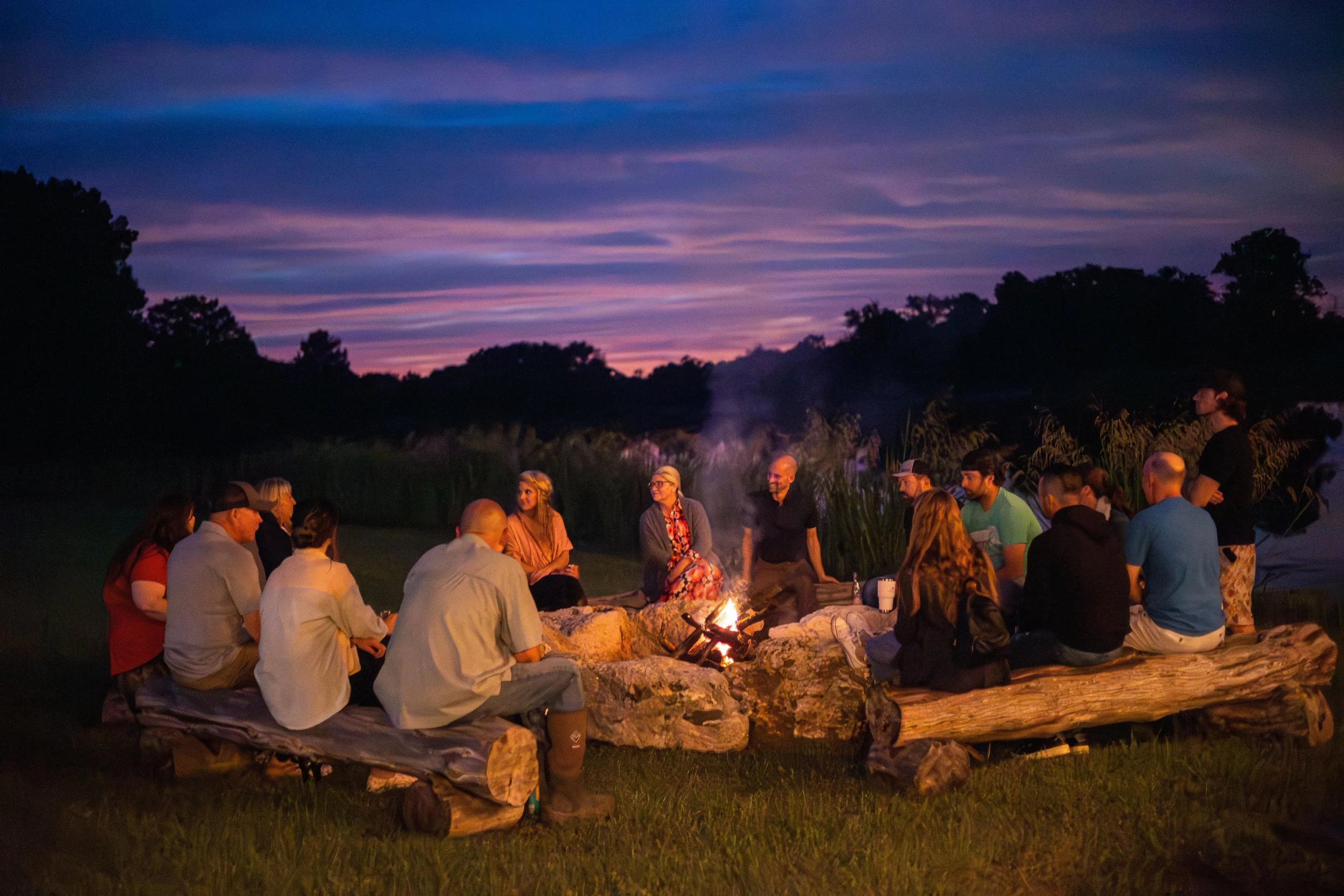
The evening doesn't end — it shifts. Someone suggests a walk down to the lake. The fire gets going. The conversation that started at dinner continues around the campfire and goes somewhere it never would have gone in a conference room. The team member who barely talked all day finally says the thing they've been sitting on for months. The leadership team that arrived with an unspoken tension works through it not in a facilitated session but in a two-hour conversation next to a fire at 11pm.
That's not an accident. That's what happens when you remove the escape route and give people a shared space that's genuinely worth being in.
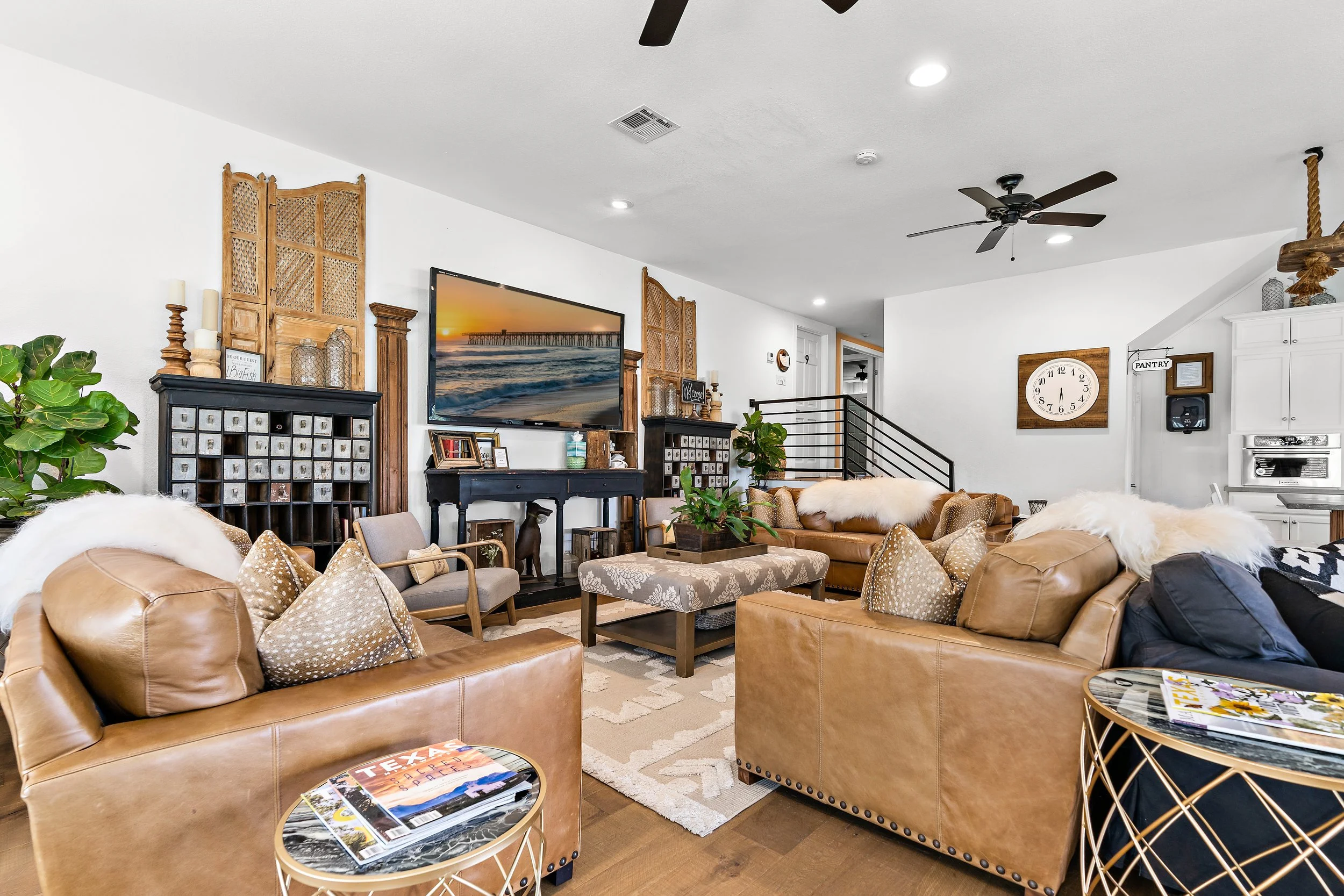
Spring Lakes Ranch accommodates 100+ guests overnight across the Lake House, Ranch House, and Cottage — keeping your entire team on the property from Friday arrival to Sunday checkout. No hotel overflow. No splitting up. No momentum lost between the evening session and breakfast the next morning.
Organic Team Building vs. Forced Team Building
Every corporate retreat planner has been through the ropes course conversation. The trust fall. The facilitated workshop where a consultant explains what your team's communication styles mean. Some of it is useful. Most of it is endured.
The activities that actually build teams don't feel like team building. They feel like fun. They feel like competition. They feel like the shared experience of doing something together that nobody planned on caring about as much as they did.
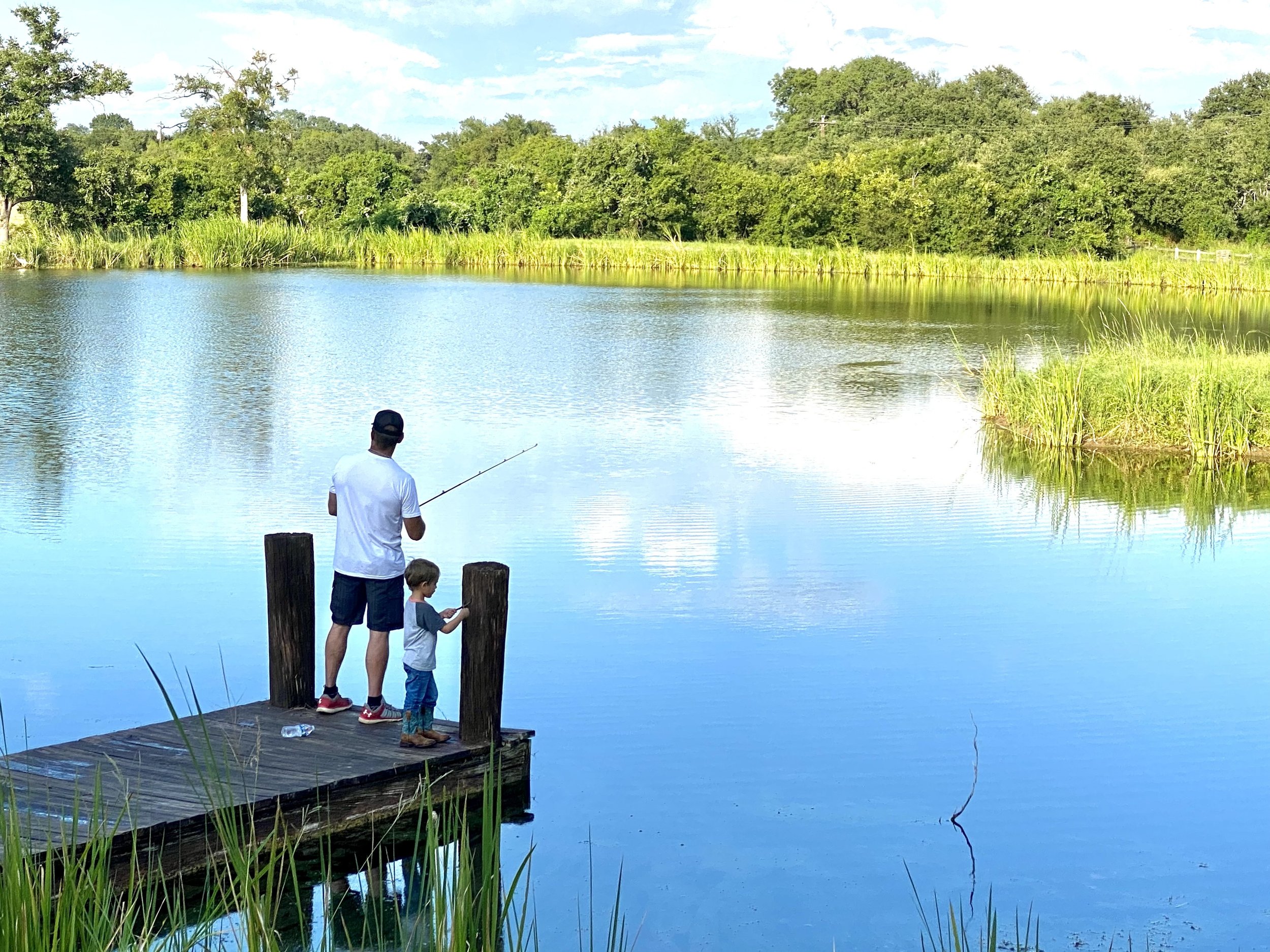
A pickup pickleball game that gets surprisingly intense. A fishing competition where the quietest person on the team turns out to be the best angler. A kayak race that produces more genuine laughter than anything on the official agenda. A campfire that starts as a casual gathering and ends up being the most honest conversation the leadership team has had in two years.
That's what a ranch retreat produces. Not because it was designed to — but because the environment creates the conditions for it naturally.
At Spring Lakes Ranch, your team has access to fishing, kayaking, two swimming pools including an artesian spring-fed pool, basketball, tennis and pickleball courts, a sand volleyball court, hiking trails across 1,000 acres, farm animal encounters, and a stone campfire with log seating. 🎯 None of it requires a facilitator. All of it builds teams in ways that an icebreaker exercise never will.
The Budget Conversation Nobody Is Having Honestly
Hotel retreats feel cheaper on paper. They're not.
When you add up the hotel room block, the conference room rental fee, the AV charges, the catered meals at hotel pricing, the parking fees, the incidentals, and the transportation to and from whatever off-site dinner you book to add some life to the agenda — the number climbs fast. And that's before you account for what you didn't get: the fragmented experience, the team that spent half the retreat in their rooms, the strategic planning session that produced a deck nobody followed up on.
A private ranch rental like Spring Lakes Ranch consolidates everything into one investment. Lodging, gathering space, activities, and dining flexibility — all in one place, all for one group. No hidden fees. No fragmentation. No paying resort prices for an environment that works against your goals.
And the ROI conversation changes entirely when you factor in what a great retreat actually produces. Teams that trust each other more. Leaders who finally got aligned. A strategic direction that actually stuck because the conversation that produced it happened in the right environment.
That's not a line item on a budget spreadsheet. But it's real, and companies that have made the switch know it.
Why Central Texas Is the Right Place for It
Texas companies have a geographic advantage that companies in other states don't — a central region that's within reasonable driving distance of every major city in the state simultaneously.
Spring Lakes Ranch sits in Aquilla, Texas, just 20 minutes south of Waco — centrally positioned between Dallas/Fort Worth, Austin, Houston, and San Antonio, all within 1.5 to 2.5 hours. For companies with team members distributed across Texas, that location means nobody gets punished with a four-hour drive while someone else gets a 45-minute commute. Everyone travels roughly the same distance. Everyone arrives roughly the same time. The retreat starts on equal footing. 📍
The proximity to Waco also gives companies a natural Sunday morning option — Magnolia Table for a team brunch, a walk through The Silos, or a quick exploration of downtown before everyone heads home. It's the kind of soft landing that makes a Sunday checkout feel like a reward rather than a logistics problem.
What the Companies That Come Back Every Year Know
There's a pattern that emerges with companies that make the switch from hotel retreats to Spring Lakes Ranch. The first year, the decision-maker takes a chance on something different. The retreat exceeds expectations. The team talks about it for weeks afterward. And then, without much deliberation, the same person books it again for next year.
Not because it's the path of least resistance — a hotel is still easier to book. But because they saw what happens when you put a team in the right environment, and they're not willing to go back to a version of a retreat that doesn't produce that.
The traditional corporate hotel stay isn't going away. But for companies that have figured out what a retreat is actually for — and what kind of environment makes it possible — the ranch is winning. 🌿
Plan Your Company Retreat at Spring Lakes Ranch
Spring Lakes Ranch offers flexible booking for corporate groups of every size — from small leadership teams reserving one or two homes to full company retreats booking the entire 1,000-acre property for complete exclusivity. The Event Barn and Conference Center handles your meeting and presentation needs. The land, the water, the campfire, and the wide-open Texas sky handle everything else.
Dates fill quickly — especially in spring and fall when corporate retreat season peaks across Texas.
📩 Contact Spring Lakes Ranch today to check availability and start planning. Your team has earned a retreat that actually works. 🌾